
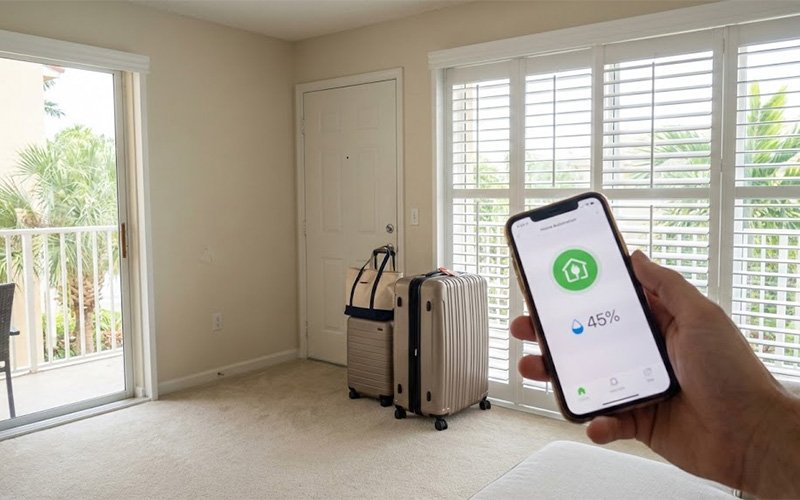
For thousands of seasonal residents in Fort Myers and Naples, spring means one thing: packing up and heading North for the summer. But while you are enjoying the cool breezes of Michigan or New York, your Florida condo is about to face its biggest challenge of the year: The Summer Humidity.
Every October, we receive frantic calls from returning snowbirds who walk through their front door and are hit with a wall of musty air. They find fuzzy green growth on their leather furniture, their shoes, and their kitchen cabinets.
This is what we call a “Mold Bloom.” The good news? It is 100% preventable if you follow the right protocol before you leave.
The Golden Rule: It’s Not About Temperature, It’s About Humidity
The biggest mistake homeowners make is setting their thermostat to 80°F (to save money) and walking away. In a humid climate like ours, temperature control is not moisture control.
Mold does not need light to grow. It needs three things:
- Food: Drywall, wood, dust, leather.
- Oxygen: The air in your home.
- Moisture: Relative Humidity (RH) above 60%.
To prevent mold, you must keep your indoor Relative Humidity below 55% at all times. If your AC isn’t running enough to pull moisture out of the air, your home becomes a greenhouse.
The 5-Step “Close Down” Checklist
Before you lock the door for the season, follow these steps recommended by Florida Mold Consultants:
1. Install a Humidistat (or Smart Thermostat)
If you have an older system, install a separate humidistat. This device overrides the temperature setting and forces the AC to run whenever humidity hits 55%—even if it’s cool inside. If you have Wi-Fi, a smart thermostat (like Nest or Ecobee) allows you to monitor this from your phone up North.
2. Deep Clean Before You Leave
Mold loves dust. Dust is made of organic skin cells—perfect mold food. If you leave a layer of dust on your furniture, mold will settle there first. Vacuum rugs, wipe down leather couches, and clean ceiling fans.
3. Open Doors, Close Blinds
Air circulation is critical. Leave all bedroom and bathroom doors open to allow the AC to circulate air into corners. Close your blinds to reduce the “heat load” from the sun, which keeps the house cooler without overworking the AC.
4. Check Your AC Drain Line
The most common cause of summer floods is a clogged AC drain line. Pour a cup of vinegar down the condensate line to kill algae buildup before you leave.
5. Buy a $15 Wi-Fi Hygrometer
Don’t guess. Buy a cheap remote sensor (like Govee) that connects to Wi-Fi. It will send an alert to your phone if your condo’s humidity spikes above 60%, allowing you to call a neighbor or property manager before damage occurs.
Worried About What You’ll Find When You Return?
If you suspect your home has been sitting in high humidity, don’t just “crank the AC” when you arrive. That can blow spores throughout the house.
Florida Mold Consultants offers seasonal inspections. We can test the air quality before you arrive to ensure your winter retreat is safe and healthy.
Peace of Mind for Snowbirds
Protect your Florida home while you are away. If you need a pre-season checkup or suspect a humidity issue, call Florida Mold Consultants at 1-800-352-6653.